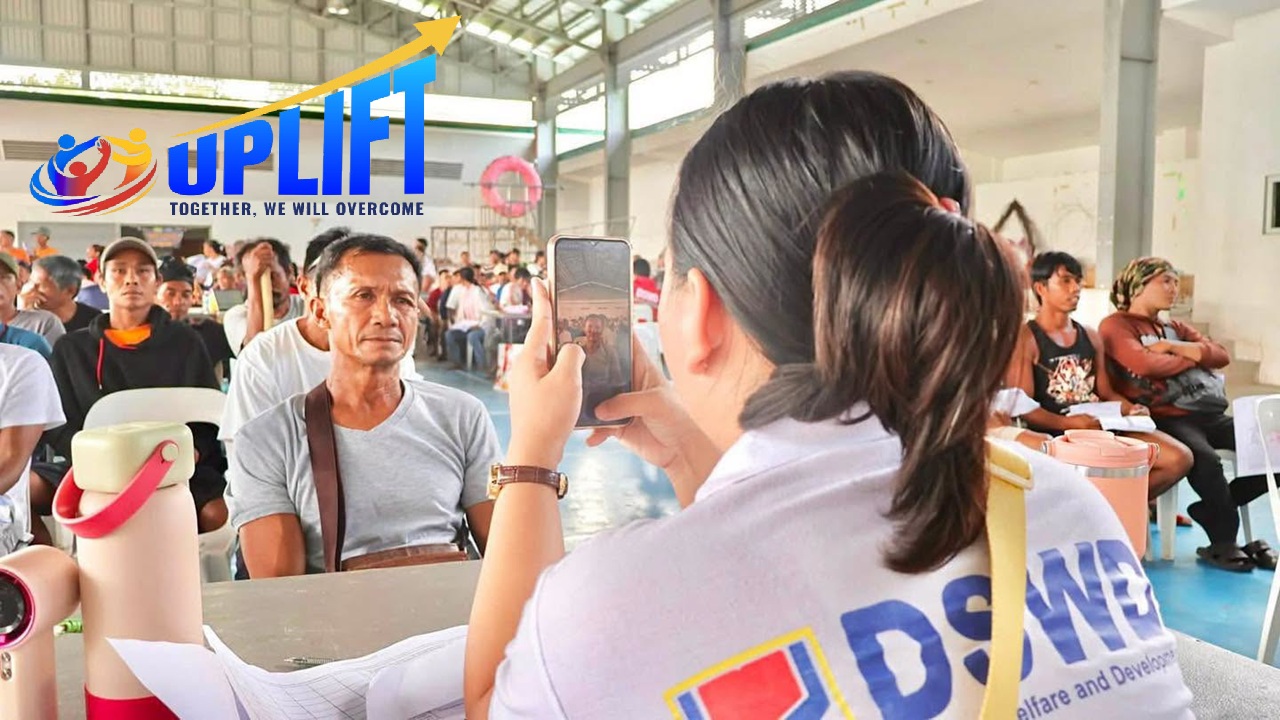
You’ve probably seen it on Facebook. A ₱2,000 grant. Your barangay workers mentioned something called “UPLIFT.” Well, it’s a real program from the national government that stands for the Unified Package for Livelihoods, Industry, Food, and Transport. When the global oil markets were shaken with the Middle East conflict in early 2026, the Filipino households felt it first, in gas prices and grocery bills. President Marcos responded by signing Executive Order No. 110 to declare a national state of energy emergency. That order didn’t just acknowledge the crisis — it created UPLIFT, a whole-of-government framework to keep fuel, food, electricity, and transport moving. It is the government’s answer — a wide-reaching effort covering fuel, electricity, food prices, transportation, and support for the Filipinos who feel rising costs the hardest.
The ₱2,000 UPLIFT cash assistance — also known as “G2P,” or Government-to-Person aid — is a direct grant meant to protect what little purchasing power low-income households have left while the emergency runs its course. It is just one piece of that framework, not a standalone program: a direct, no-strings grant meant to protect the purchasing power of families who had the least room to absorb the shock. Its legal basis — EO 110 — is backed by DSWD implementation and PSA/CBMS data to find the households who need it most.
UPLIFT vs UPLIFT Cash Assistance
UPLIFT is the government’s whole-of-government answer to the Middle East-driven energy emergency — a framework covering fuel, electricity, food, and transport, created under Executive Order No. 110. Though it is the program’s most visible benefit, the UPLIFT Cash Assistance — a direct, no-strings ₱2,000 grant aimed at the households absorbing the sharpest hit to their budgets — only serves as a part of the larger program structure, not a program on its own.
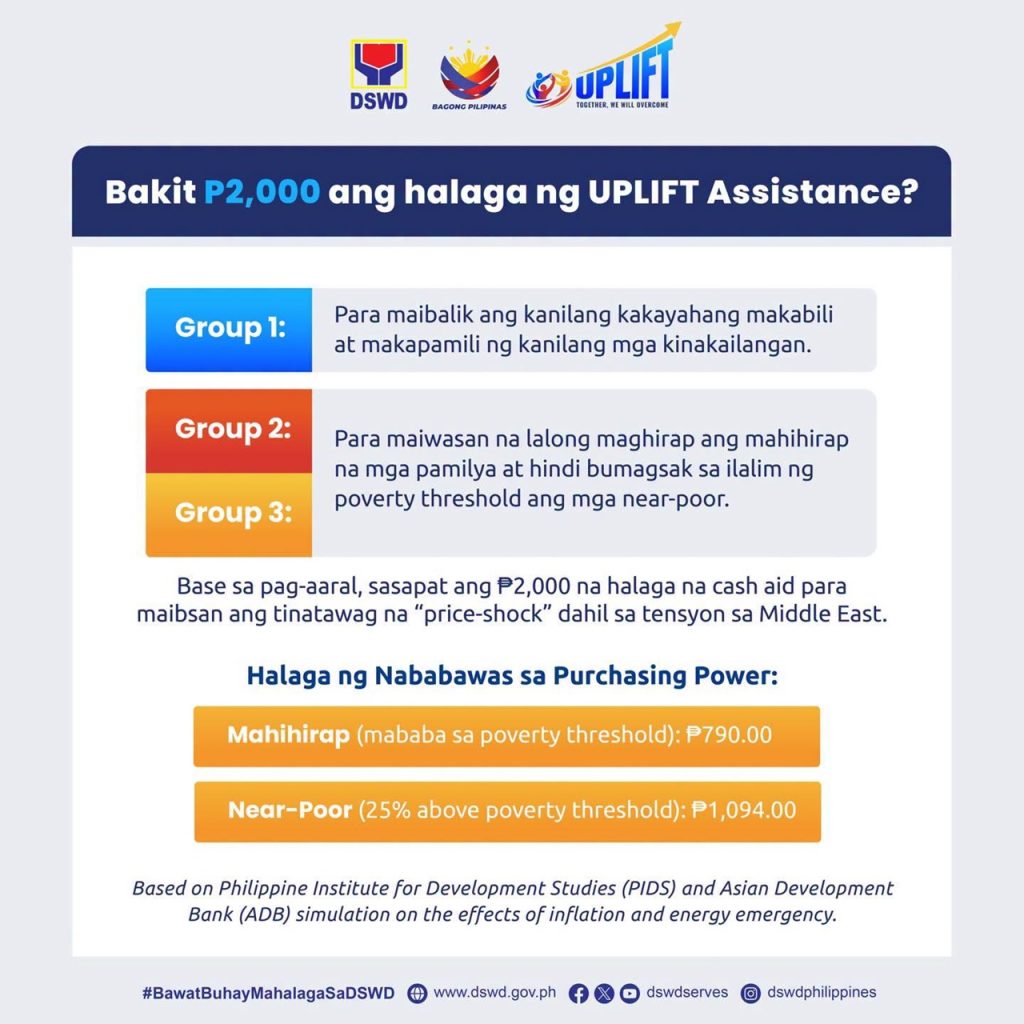
The program objective is also quite straightforward — to restore the purchasing power that rising costs quietly stripped away, before it turns into real poverty. The actual benefit shows up fast: money that covers food, transportation, and daily needs, delivered through GCash, LandBank, or in-person payouts, reaching roughly 7.5 million households. Put together, it’s a relief today and a buffer for tomorrow — proof that no single shock should be enough to knock a family off the ground it’s standing on. Beyond the cash, however, UPLIFT’s five pillars aim wider: steady fuel supply, reliable electricity, stable food prices, and protection for the sectors hit hardest — drivers, farmers, fisherfolk, students, seniors. The end goal isn’t just surviving one crisis. It’s coming out the other side with the gains of the past few years still intact, and a country a little less exposed the next time the world shakes.
Who Qualifies, and How Much
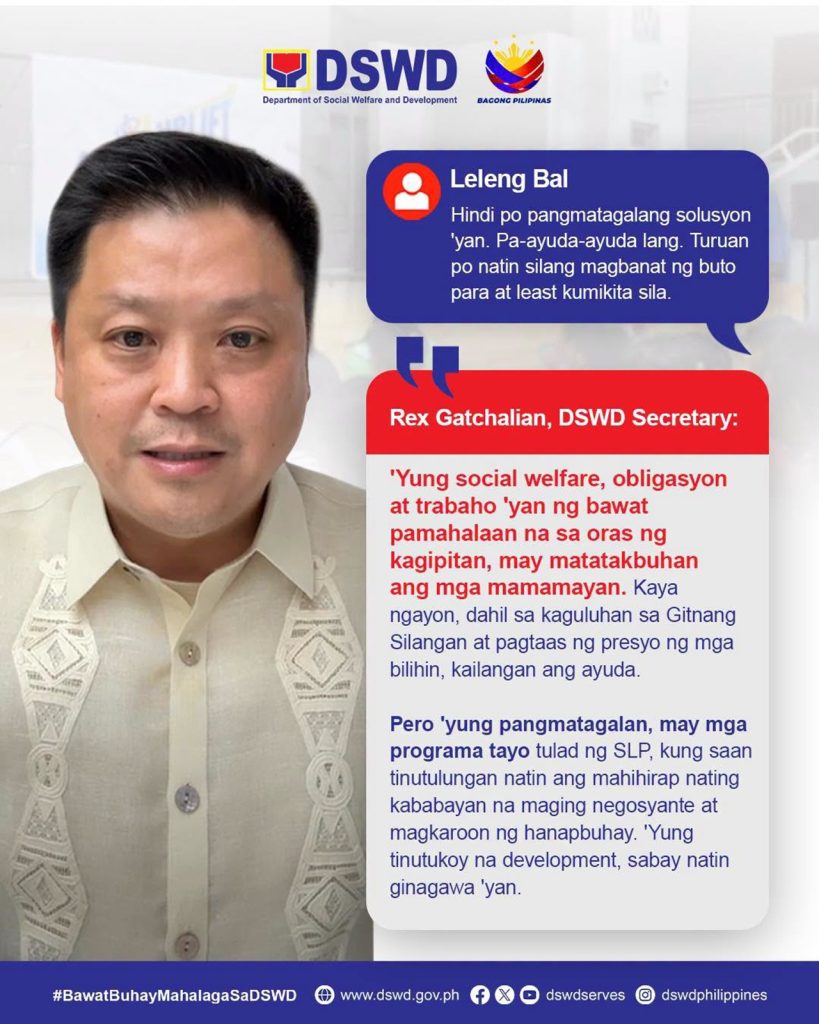
DSWD (Department of Social Welfare and Development) Secretary Rex Gatchalian laid it out plainly in a July 17, 2026 press briefing, alongside the Social Security System (SSS), the Philippine Statistics Authority (PSA), and Department of Economy, Planning, and Development (DEPDev, formerly NEDA). According to the announcement, the beneficiaries are divided into three groups, with three different paths.
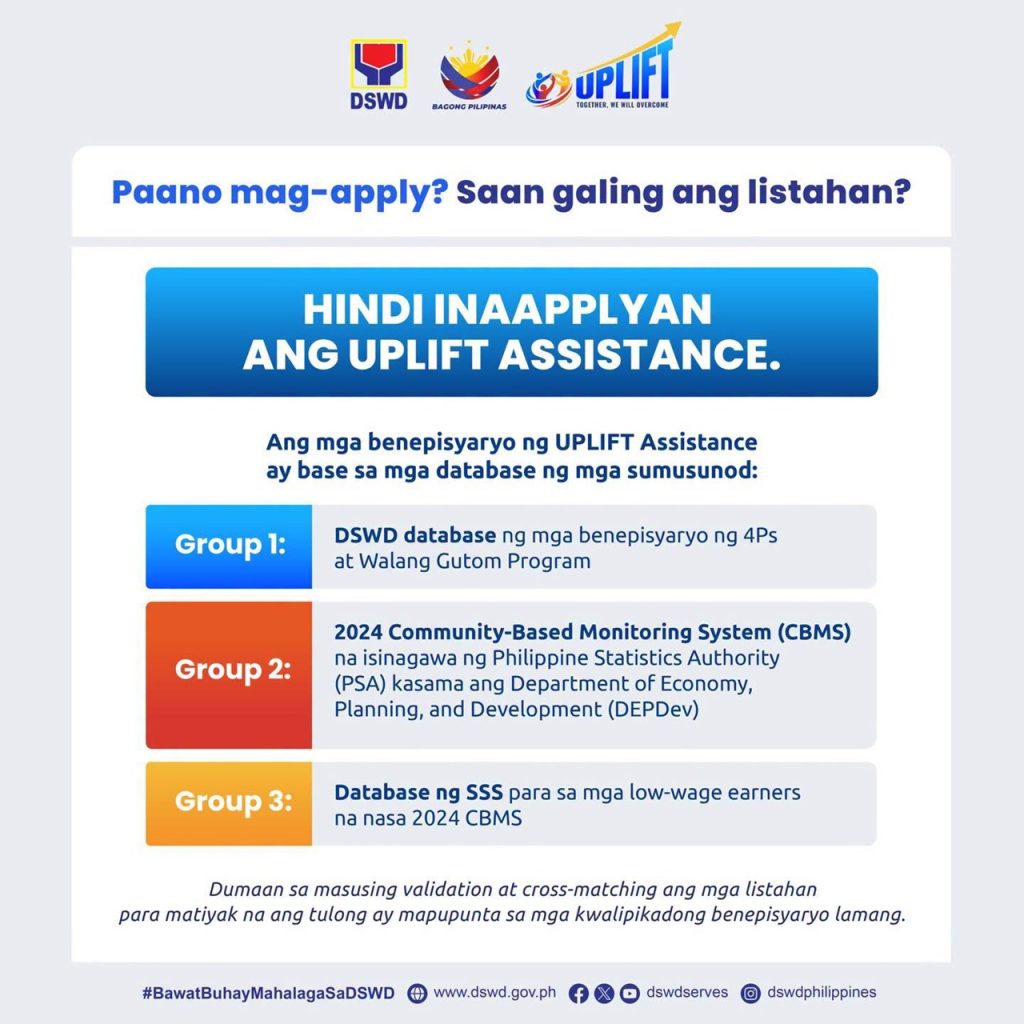
Group 1 (3.5 million households)
Already enrolled in 4Ps or the Walang Gutom Program. They get a one-time ₱2,000, credited straight to the LandBank or GCash account already on file. No new steps required.
Group 2 (2.5 million households)
Identified as poor or near-poor through the PSA’s Community-Based Monitoring System, not already in 4Ps. They receive ₱2,000 a month, July through December 2026.
Group 3 (1.5 million low-income SSS members)
Notified through the My.SSS portal, or by their registered SSS email.
Add it up: roughly 7.5 million households. The government estimates it will keep about 1.2 million Filipinos — mostly near-poor families — from slipping below the poverty line.
Take note that there is no website where you can apply for UPLIFT. The DSWD pulls its list from data it already has — Community-Based Monitoring System (CBMS) records, 4Ps and WGP rolls, SSS membership. This means that in the selection of the beneficiaries, there are no local officials involved, no shortcut list, and no side door. Just the CBMS data, straight from the PSA. So, if you think your household qualifies but hasn’t heard anything — don’t go looking for a registration form online. Walk into your barangay hall or local DSWD office and ask. That’s the right and safest process.
How the Money Arrives
If you are a beneficiary of the UPLIFT Program cash assistance, the money will be disbursed as follows:
- 4Ps / WGP households: Credited automatically. Nothing to do.
- CBMS households (Group 2): Manual payouts, plus validation and digital account enrollment, coordinated through your local government. Watch for the schedule from your LGU or barangay.
- SSS members (Group 3): Notified through My.SSS or their registered email.
- Walang Gutom (WGP) beneficiaries: Keep an eye on DSWD’s official page, @dswdserves, and @DSWDWalangGutomProgram, for payout dates tied to food redemption.
Frequently Asked Questions (FAQs)
For your reference, here are some common questions and answers regarding the UPLIFT G2P Cash Assistance Program:
1. Is there a fee to receive this assistance?
No. It’s a grant, not a loan. Free to enroll, free to receive.
2. I think I qualify but haven’t been contacted. What should I do?
Go to your barangay hall or local DSWD office. Ask in person. Skip the websites.
3. How long do the monthly payments last?
For 4Ps members, it is a one-time thing. For CBMS households or Group 2, the program runs from July through December 2026. What happens after that depends on government policy, announced through official channels.
4. My payout is late. Who do I call?
Your barangay, your local DSWD office, or the numbers below. Never a number listed on unofficial “guide” sites.
Important Reminders
Take note that because this program involves receiving actual cash, it is more susceptible to scams. To protect yourself, make sure to keep these things in mind:
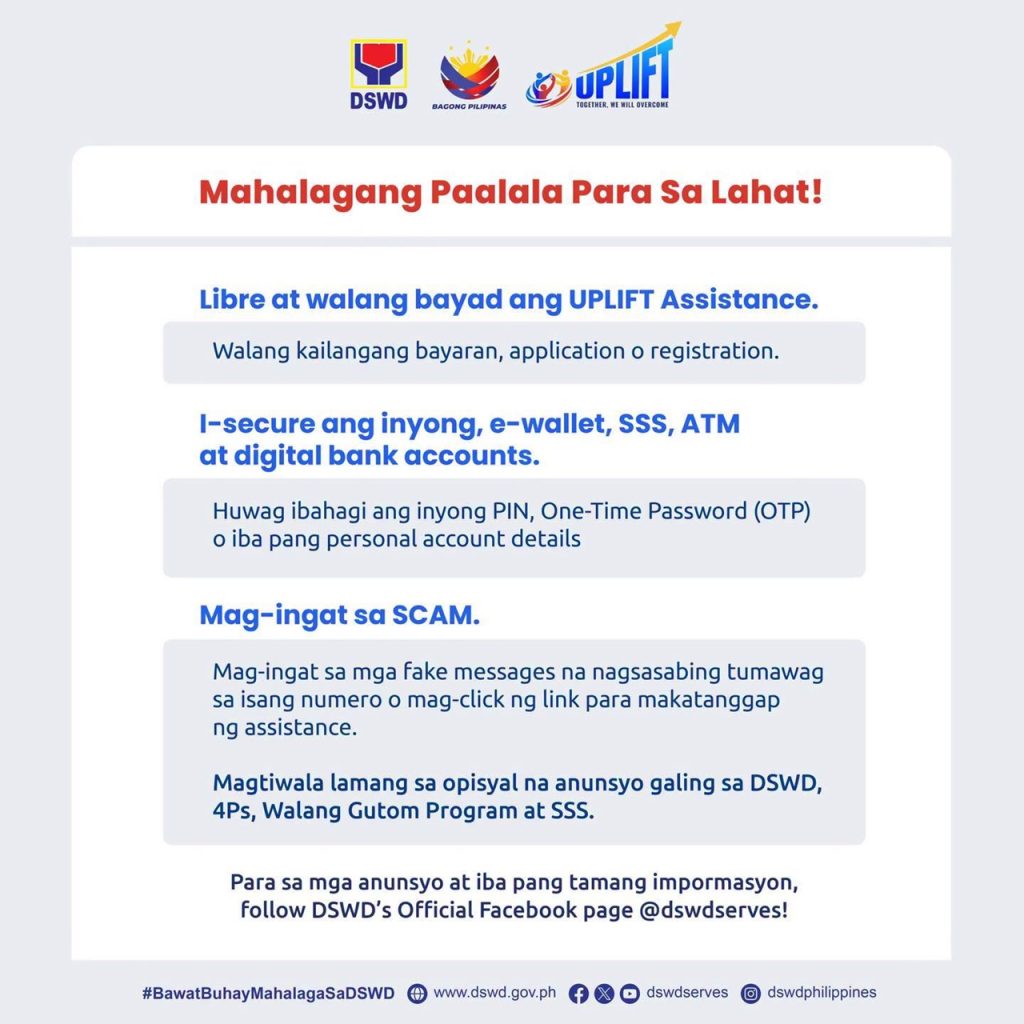
- Real government websites end in .gov.ph. It doesn’t matter how official it looks. It doesn’t matter if it quotes real DSWD facts correctly.
- No government office will ever ask for your OTP, MPIN, or GCash password. Anyone who does wants your account, not your welfare.
- UPLIFT is free. Every step of it.
- Real government aid doesn’t work on a countdown clock.
Contact Information
If you’re not sure whether something is real, stop. Don’t click. Call the numbers above, or walk to your barangay and ask. You may also contact the authorities via the following:
- Department of Social Welfare and Development
- Main HQ Office Address: DSWD Building, Constitution Hills, Batasan Complex, Quezon City, PH 1126
- Tel. No.: (632) 8931-8101 to 07, 09171105686 and 09178272543 (Globe), 09199116200 (Smart)
- Email Address: inquiry@dswd.gov.ph
- Official website: https://www.dswd.gov.ph/
- Official Social Media Pages:
- SSS
- HQ Address: SSS Building East Avenue, Diliman Quezon City, Philippines
- SSS Hotline: 1455
- Contact Number: (632) 8920-6446 to 55
- Official website: https://www.sss.gov.ph/
- My.SSS portal
- Facebook: Philippine Social Security System – SSS
- In person
- Your barangay hall
- The local DSWD field office (You can find a complete list of FOs in the official DSWD website or via this link: https://www.dswd.gov.ph/directory-fo/)
To learn more about what this UPLIFT Program is all about, you may also watch this video: