The Paleng-QR PH program is a joint initiative of the Bangko Sentral ng Pilipinas (BSP) and the Department of the Interior and Local Government (DILG) designed to promote cashless payments in public markets and local transportation, especially tricycles, through the national QR code standard, QR PH. It is a nationwide effort to make everyday payments simpler, safer, and more convenient, allowing you the luxury of not having to dig through loose coins or worry about fake bills or not having exact change when going to the market.
It is a cashless, QR code–based solution for everyone—market vendors, tricycle drivers, small business owners, commuters, and even ordinary consumers—who want faster, safer, and more practical payment options. And with its expanded version—Paleng-QR PH Plus—the coverage now includes more business types and local transport services in every city and municipality.
What Is the Paleng-QR PH Program?
The Paleng-QR PH program is a joint initiative of the BSP and DILG designed to promote cashless payments in public markets and local transportation, especially tricycles, through the national QR code standard, QR PH. It allows QR-based payments that work between different banks and e-wallets, so merchants and consumers can make payments easily, even if they use different apps.
It aims to:
- Make cashless payments convenient for ordinary Filipinos
- Help market vendors and tricycle drivers accept payments using QR codes
- Encourage local government units (LGUs) to push digital payments
- Grow the country’s digital payments ecosystem
The program comes from the idea that Filipinos make most of their daily payments in markets and transport hubs, so these areas must also go cashless for digital payments to truly work.
What Is Paleng-QR PH Plus?
Paleng-QR PH Plus, introduced in November 2022, expands the program to cover all business establishments and more local transport groups, not just market vendors and TODA. It better reflects the broader implementation required under the June 22, 2022 Joint Memorandum Circular (JMC).
Program Components
The Paleng-QR PH program has three main components:
1. LGU Policy Issuance
LGUs must implement policies requiring or encouraging QR PH digital payments across:
- Public markets
- Tricycles
- Business establishments
- Local transport services
2. Account Onboarding Support
LGUs, with FSPs, help merchants and drivers:
- Open a transaction account
- Get their own QR PH code
- Join account opening activities
3. Financial Literacy Programs
LGUs, BSP, DILG, and FSPs conduct seminars on:
- Using digital payments effectively
- Financial services for MSMEs
- Financial consumer protection
Benefits
The program is designed to offer the following benefits:
For Market Vendors & Local Businesses
- Faster and easier payments
- No need for change
- Reduced handling of cash
- Protection from counterfeit money
- Access to banking services
For Tricycle Drivers & Local Transport
- Smooth fare collection
- Less risk of lost or stolen cash
- Easier record-keeping
For Consumers & Commuters
- Pay using your phone
- No need to withdraw or bring cash
- Safer and more hygienic transactions
For LGUs
- Easier distribution of ayuda and benefits
- Better financial inclusion for communities
Who Is It For?
The program is designed for:
- Market vendors
- Tricycle drivers and operators (TODA)
- Sari-sari stores
- Small business owners
- Other local transport groups
- Consumers and commuters
- Local government units (LGUs)
If you pay or accept money in public markets, neighborhood shops, or local transportation, this program is meant to help you.
Who Should Consider Joining the Program?
This program is ideal for:
- Vendors who want easier transactions
- Micro-business owners who want to grow
- Drivers who need safer, faster fare collection
- Consumers who want simple digital payments
- LGUs aiming to modernize local commerce
If you want a smoother way to pay or get paid, this program is for you.
Requirements
Here’s a complete list of the documents you’ll need if you wish to join the program:
For Market Vendors, Tricycle Drivers, Small Business Owners, and Other Merchants
To participate and open a transaction account during the LGU’s “account opening day,” you will need:
- A valid ID
- If you don’t have one, the BSP allows:
- Barangay certification
- Printed e-PhilID (accepted as a sufficient proof of identity under BSP Memorandum No. 2022-044)
- If you don’t have one, the BSP allows:
- Basic personal information requested by your chosen financial service provider (FSP)
- Willingness to open a QR Ph-ready transaction account with any participating FSP of your choice
- Presence at the LGU’s account opening activity where booths and assistance will be provided
For Consumers (Non-Merchants)
Consumers can also join account opening days. Requirements:
- Valid ID
- Or barangay certification / printed e-PhilID if you do not have standard IDs
- Basic personal details for account creation
- A mobile phone where you can install a banking app or e-wallet that supports QR Ph (optional but helpful)
For LGUs
Local government units joining the Paleng-QR Ph program must prepare:
- A local ordinance or policy promoting, incentivizing, or mandating QR Ph digital payments
- Coordination with multiple QR Ph-ready FSPs for account opening days
- Financial literacy sessions with the help of BSP, DILG, and FSPs
- Assistance for onboarding vendors, drivers, and merchants into QR Ph-ready accounts
For Financial Service Providers (FSPs)
Participating FSPs must be ready to provide:
- Customer assistance booths during account opening days
- QR code printouts
- Information materials on digital payments and financial services
- Resource speakers for financial literacy sessions
- Dedicated contact persons for LGU coordination
How to Participate
Participating in the program require following these proper steps:
For Market Vendors, Tricycle Drivers, Sari-Sari Store Owners, and Other Merchants
Step 1: Check if your LGU is part of the program.
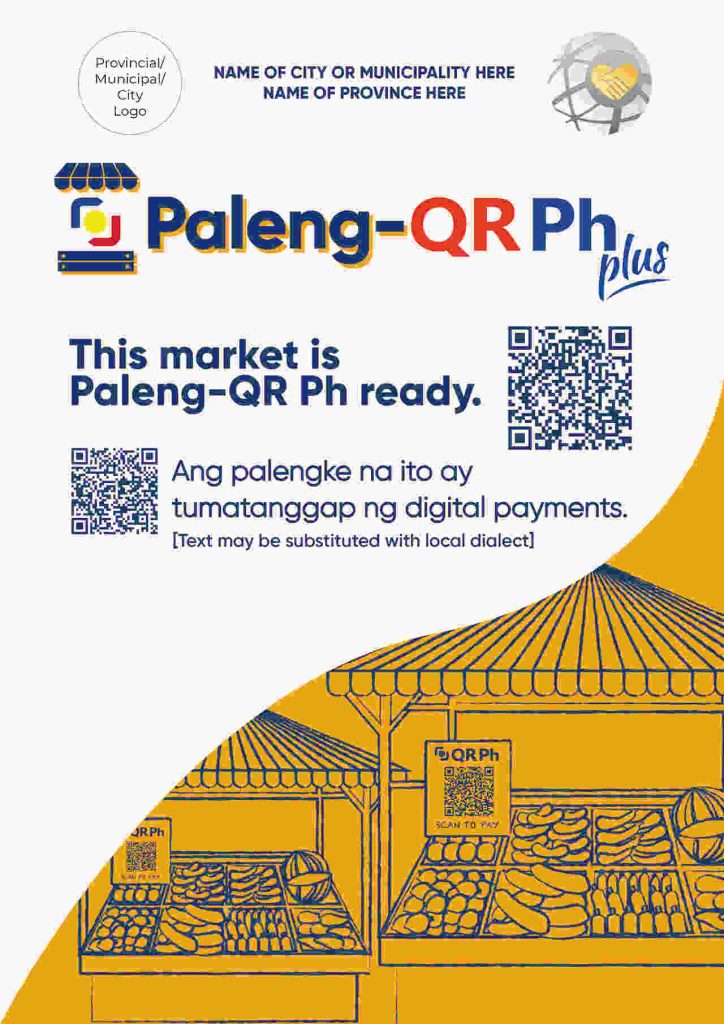
Look for Paleng-QR Ph banners in your local market or ask your barangay or LGU office if they have launched the program.
Step 2: Ask about the next “Account Opening Day.”
LGUs schedule special days where financial service providers (FSPs) help people open transaction accounts.
Step 3: Prepare your ID or barangay certification.
Bring:
- A valid ID, or
- Barangay certification, or
- Printed e-PhilID (accepted under BSP Memo No. 2022-044)
Step 4: Visit the account opening booths.
Go to the LGU-designated area where partner banks/e-wallets have assistance counters.
Step 5: Open your transaction account.
Provide basic information to the FSP so they can create your QR Ph-ready account.
Step 6: Get your printed QR code.
FSPs will give you your QR code printout so you can accept cashless payments instantly.
Step 7: Display your QR code at your stall or tricycle.
Put it somewhere visible so customers can scan and pay.
Step 8: Attend financial literacy sessions (optional but helpful).
LGUs, BSP, DILG, and FSPs offer short talks on using digital payments and managing your money.
For Consumers and Commuters
Step 1: Check if your LGU/market is part of Paleng-QR Ph.
Look for posters or ask your local officials.
Step 2: Join the account opening day (optional but encouraged).
You can also open a QR Ph-ready transaction account even if you’re not a merchant.
Step 3: Install a QR Ph-ready banking app or e-wallet.
This lets you pay vendors and drivers quickly using your phone.
Step 4: Start paying with QR.
Scan the vendor’s or driver’s QR code whenever you buy or pay for a ride.
For LGUs
Step 1: Review the DILG-BSP Joint Memorandum Circular.
This outlines the guidelines for implementing Paleng-QR Ph.
Step 2: Draft and approve a local ordinance.
Promote, incentivize, or require the use of QR Ph digital payments.
Step 3: Coordinate with multiple FSPs.
Partner with banks and e-wallets that support QR Ph.
Step 4: Organize account opening days.
Set up booths and schedule activities to onboard vendors, TODA, businesses, and consumers.
Step 5: Provide or host financial literacy sessions.
Invite BSP, DILG, or FSP speakers to educate participants.
Step 6: Promote the program.
Use banners, market announcements, and barangay outreach to encourage participation.
For Financial Service Providers (FSPs)
Step 1: Coordinate with LGUs.
Assign contact persons for smooth planning.
Step 2: Set up customer assistance booths.
Provide help during account opening days.
Step 3: Assist participants in opening transaction accounts.
Help merchants, drivers, and consumers complete onboarding.
Step 4: Provide printed QR codes.
Give participants their QR Ph codes for accepting payments.
Step 5: Provide learning materials and speakers.
Support LGU financial literacy efforts.
How the Paleng-QR PH Program Works
The program is carried out through a set of responsibilities shared by LGUs, BSP, DILG, and financial service providers (FSPs).
Role of LGUs
LGUs are expected to:
- Issue ordinances promoting or requiring QR PH payments
- Encourage market vendors, TODA, and businesses to use digital payments
- Organize “account opening days” to help target users create transaction accounts
- Partner with one or multiple QR PH-ready financial service providers
Role of FSPs
Participating banks and e-wallets will:
- Join the LGU’s account opening days
- Set up customer assistance booths
- Provide QR code printouts
- Offer guides and materials on digital payments
- Provide speakers for financial literacy sessions
- Assign contact persons for smooth coordination with LGUs
Role of BSP and DILG
BSP and DILG will:
- Provide technical support on account onboarding
- Guide LGUs on digital payment adoption
- Offer financial literacy support
- Promote the program nationwide
Frequently Asked Questions (FAQs)
For your reference, here are some common questions and answers regarding the BSP Paleng-QR PH Program:
1. I’m a merchant but I don’t have a valid ID. Can I still join?
Yes. BSP allows simplified IDs for transaction accounts. Acceptable documents include:
- Barangay certification
- Printed e-PhilID (accepted under BSP Memorandum No. 2022-044)
You may coordinate with your barangay officials or LGU staff for help.
2. Can all LGUs join the program?
Yes. The DILG and BSP issued a JMC inviting all LGUs nationwide to adopt Paleng-QR PH.
3. What if I’m a regular consumer?
You can still join account opening days.
Having a transaction account helps you:
- Pay digitally
- Avoid handling cash
- Access loans, insurance, and investments in the future
Video: Paleng-QR PH
To learn more about the Paleng-QR PH program, you may watch this video below: